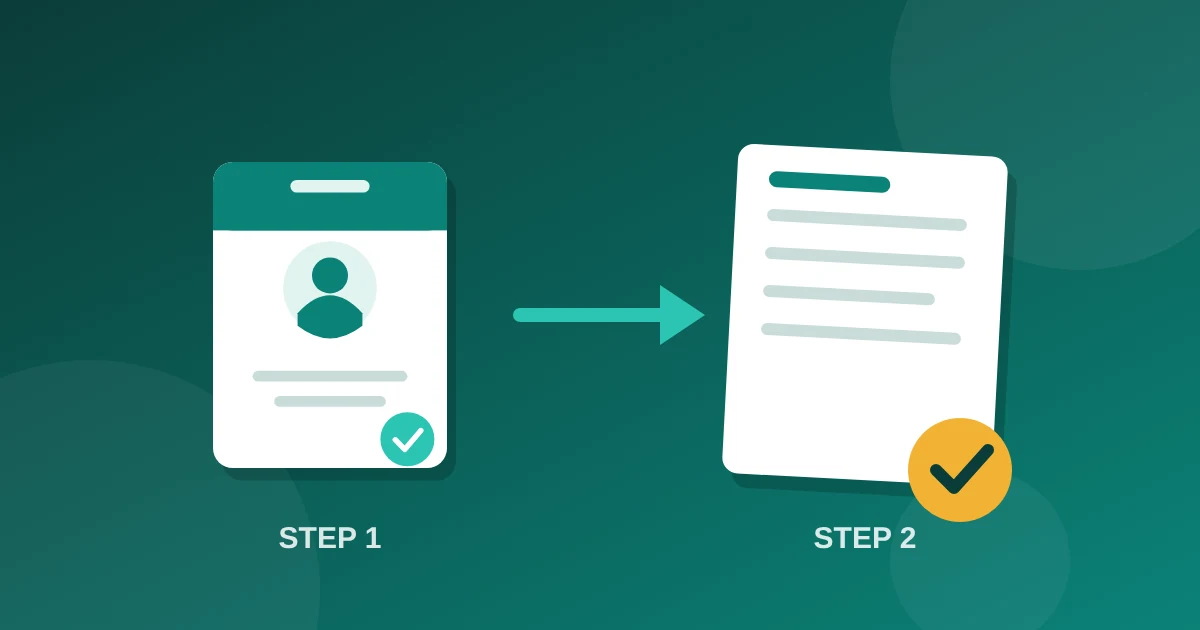
If you are starting to accept insurance, you will hear "credentialing" and "payer enrollment" used almost interchangeably. They are not the same thing, and confusing them is one of the most common reasons new providers wait longer than they expected to get paid.
Credentialing: proving who you are
Credentialing is the verification step. A payer (or a hospital) checks that you are who you say you are and qualified to do what you do. That usually means confirming your license, education and training, work history, malpractice coverage, and any board certification. For most commercial payers, the shared starting point is your profile in the CAQH Provider Data Portal.
Payer enrollment: getting into the network
Enrollment is the contract and setup step. Once a payer is satisfied with your credentials, you are added to their network, with a set of agreed rates, and linked to your practice's billing details. Only after that is effective can you bill that payer at in-network rates for your patients.
Why the difference matters
Credentialing can be approved while enrollment is still pending, and your start date for billing is the enrollment effective date, not the day you were approved. Seeing patients before that date can mean claims that are denied or paid out of network. Always ask the payer for the effective date in writing before you schedule their members.
How they fit together
- Get your license, NPI and malpractice coverage in order.
- Complete and attest your CAQH profile, and authorize the payers you are applying to.
- Submit each payer's application (this is where credentialing and enrollment are usually handled together).
- Follow up, and confirm the effective date and your participation details.
- Diary your re-attestation and revalidation dates so you never fall out of network.
Each payer works at its own pace, so it helps to start early and track every application in one place. We cover timing in how long payer enrollment really takes, and the paperwork to gather first in our credentialing documents checklist.
If you would rather hand all of this off, that is what we do in all 50 states. See our services, or send us a note.
This article is general information, not legal or financial advice. Requirements and timelines differ by payer and state, so check directly with each payer.
Comments
No comments yet. Questions and thoughts are welcome.
Leave a comment